Mastering AI Overviews for 2026
By Jeannie M. Hill | Updated 9.11.2026
The term “AI Overview” (formerly part of the Search Generative Experience, or SGE) is no longer an experiment; it is a standard, official feature of Google Search. This necessitates a shift in your content strategy from keyword ranking to source credibility, structured data extraction pipelines, and answer clarity.
The core goal is to be the primary, trustworthy source the Google Gemini model can confidently quote and synthesize.
Understanding and remaining agile amid changing SERPs is crucial to business growth. Gain visibility in both organic and paid search with optimized content for AI Overviews. Tightly-themed, helpful long-tail content with high relevancy and lower search volume is consistently surfacing in AI-powered overviews.
What are AI-Generated Overviews?
AI-generated overviews offer searchers AI-powered experiences and answers. An AI Overview is an answer synthesized directly by Google AI from high-authority web pages.
These AI-generated overview queries are typically more complex. Google Search displays them when its technology seeks to answer multi-part questions that require synthesizing a range of web pages into a single cohesive response.
In my personal tests, they display significantly more often in YMYL AI search query results.
Because Google maintains high quality thresholds for these queries, appearing here is a strong positive E-E-A-T signal. Google’s Danny Sullivan and other search liaisons have underscored that AI overviews are triggered specifically when they provide added value beyond traditional search links.
How do AI Overview Generated Responses Work?
- Query Processing: When a searcher enters a query, the AI processes natural language intent and generates a draft text response.
- Document Selection: Google’s algorithm selects a focused group of authoritative web pages containing verified information related to the topic.
- Fact-Checking & Grounding: These selected documents act as factual ground-truth. If information in these sources contradicts the AI-generated text, the model adjusts its response.
- Evaluation: AI safety and scoring layers evaluate the response’s accuracy, semantic similarity, and relevance before rendering it on the SERP.
AI Optimization Needs an ROI Strategy
This requires Architecting Knowledge for the AI Era skills.
Even with fewer total clicks to your website, you can gain highly qualified sales by earning visibility in AI-powered search results.
Revenue opportunities in Google’s AI Overviews exist for businesses that adapt their strategies. Our AI optimization services help you secure visibility and drive qualified traffic across AI search landscapes.
Currently, direct AI Overview metrics—such as discrete rankings and impression counts—are limited in native tools. Despite shifts in raw click volume, alternative measurement methods provide actionable insights.
Measuring Return Beyond Traditional Clicks Includes:
- Correlating Search Data: With advanced Google Analytics 4 (GA4) modeling, we correlate search timestamps and engagement metrics to evaluate the impact of AI Overview citations.
- Winning High-Intent SERP Real Estate: Gaining a competitive edge by earning prominent AI citations for deep informational queries delivers prospects who are much closer to a purchase decision.
In summary, Hill Web Marketing demonstrates clear ROI by leveraging entity research, structured data implementation, and advanced content engineering to ensure your brand is authoritatively represented in AI-generated answers.
This drives higher revenue through high-intent interactions rather than the sheer volume of passive clicks.
Key Points About AI Overview Summaries
Understand how Google’s AI Overviews are influencing website traffic and the opportunities for maintaining online visibility:
- AI Overviews are AI-generated answer summaries that display at the top of Google Search results.
- Their core purpose is to enhance user experience by providing concise, immediate, and synthesized answers to multi-part queries.
- They lead to deeper exploration: if searchers need additional details, interactive source chips link directly to relevant authority pages.
- They are powered by Google’s Gemini multimodal language models.
- Google triggers AI Overviews only when algorithms determine they provide clear added value beyond classic organic results.
Gemini capabilities extend across Google Cloud products, serving as a foundational technology for both organic search and enterprise AI solutions.
Generative AI on Google Cloud
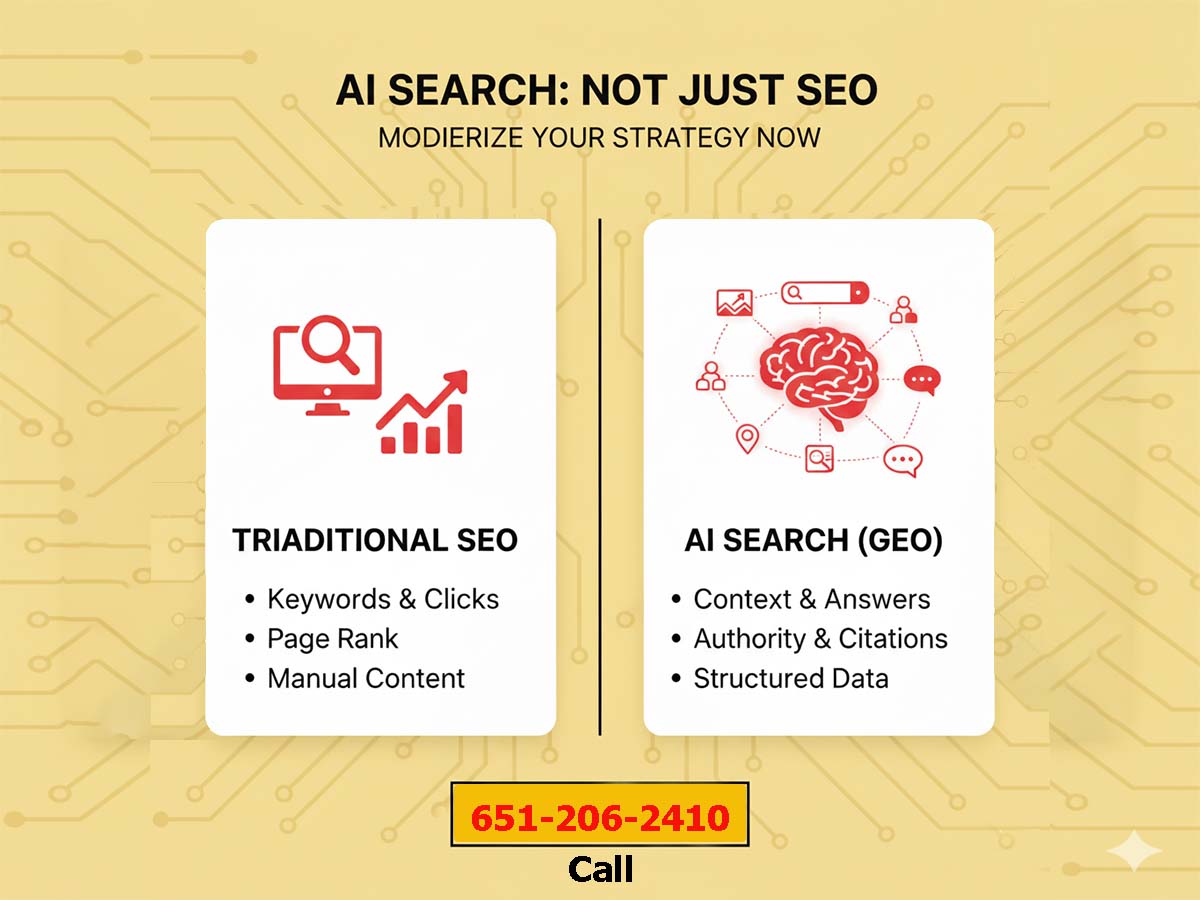
Site owners and search marketers can leverage Google’s advanced technology and models, including Gemini. Embracing this AI journey empowers websites to provide quick, efficient, and answer-rich content.
Ultimately, consumers establish the value of your site, products, and publications. How they engage with your insights determines your long-term entity strength.
Tools are emerging every week that provide new visibility insights into these overviews. Google Cloud AI tools allow developers to build with generative AI and create personalized, AI-powered user experiences.
? 5 Actionable Tactics for AI Overview Optimization (AIO)
1. Strengthen E-E-A-T: Build the AI’s Trust Signal
AI Overview visibility is fundamentally tied to Google’s confidence in your content’s quality, evaluated through E-E-A-T (Experience, Expertise, Authoritativeness, and Trustworthiness).
| Outdated Focus | Updated Tactic | Implementation |
|---|---|---|
| General mentions of E-E-A-T. | Prioritize Verifiable Human Experience. | Ensure all content has a clear author byline linked to an author profile establishing proven real-world experience. |
| Hoping to be seen as an expert. | Cite First-Party Data & Research. | Publish original case studies, proprietary surveys, and first-party findings to establish irreplaceable source authority. |
| Focusing on keyword density. | Build Brand Entity Recognition. | Implement verified Organization and Person Schema markup linking to authoritative profiles. |
2. Structure for Easy AI Extraction
AI models excel at extracting concise, fact-based answers from highly structured content. Make your content easily digestible for both human readers and Gemini algorithms:
- The Answer-First Opening: Begin key sections with a concise, bolded 1–2 sentence summary directly answering the primary question.
- Question-Based Headings: Format H2 and H3 headings as specific search questions, followed immediately by direct, scannable explanations.
- Leverage Lists and Tables: Use numbered lists for sequential processes and comparison tables for multi-attribute data.
3. Master Conversational & Complex Queries
AI Overviews trigger most frequently on queries requiring synthesis—such as comparative, multi-step, or conditional questions.
- Target Informational Long-Tail Queries: Address nuanced questions starting with *”Should I,”* *”How to compare,”* or *”What are the trade-offs between.”*
- Adopt a Natural Language Tone: Write in an authoritative, conversational style matching natural human discourse.
- Comprehensive Topic Clustering: Structure content into cohesive topic hubs where a comprehensive pillar page connects semantically to focused subpages.
4. Integrate Strategic Schema Markup
Structured data provides unambiguous, machine-readable context, dramatically increasing the likelihood of citation in synthesized overviews.
| Schema Type | Purpose | Use Case |
|---|---|---|
FAQPage |
Provides structured question-and-answer pairs. | Ideal for capturing direct answers likely to be synthesized into AI answers. |
HowTo |
Defines clear, sequential process steps. | Essential for step-by-step process queries. |
Article / TechArticle |
Declares author, publisher, and freshness signals. | Crucial for YMYL topics to reinforce verified E-E-A-T. |
5. Go Multimodal: Beyond Text
Gemini models are inherently multimodal. Optimize content to provide a comprehensive visual and textual experience:
- High-Quality Visuals: Embed clear architecture diagrams and infographics that visually simplify complex concepts.
- Descriptive Alt Text: Provide entity-focused alt attributes and descriptive file names on all images.
- Video Integration: Embed short, focused video walkthroughs with accurate, synchronized transcripts.
Early adopters are more agile when implementing new, effective content strategies.
Industry Voices & Official Documentation
Google’s leadership has shared key insights into how generative search continues to evolve:
“You may find AI-powered overviews and can ask follow-up questions in Search. If an AI-powered overview is available, it will show at the top of search results.” — Google Search Help: AI-Powered Overviews
“With our new updates, segments of code in overviews will now be color-coded with syntax highlighting, so it’s faster and easier to identify elements like keywords, comments, and strings…” — Rany Ng, VP Google Search Product Management [2]
“We’re making algorithmic enhancements to our core ranking systems to ensure we surface the most helpful information on the web and reduce unoriginal content in search results.” — Elizabeth Tucker, Google Director of Product Management [3]
“With SGE, we are able to serve a wider range of information needs and answer new types of questions, including more complex questions, like comparisons or longer queries.” — Elizabeth Reid, VP of Google Search [4]
Few Clicks Can Mean More Revenue Opportunity
Our testing demonstrates that AI answers can displace standard organic listings for general queries. How well prepared your domain is determines whether you experience traffic erosion or capture higher-converting visitors.
Success in AI optimization requires far more than basic title tags and keywords. Visibility is driven by verified E-E-A-T signals, contextual depth, and entity relevance.
We urge content teams to avoid unrefined, generic AI-generated copy. Instead, use AI tools to analyze query nuances while infusing your content with irreplaceable human experience.
AI Snapshots in Main Search Results
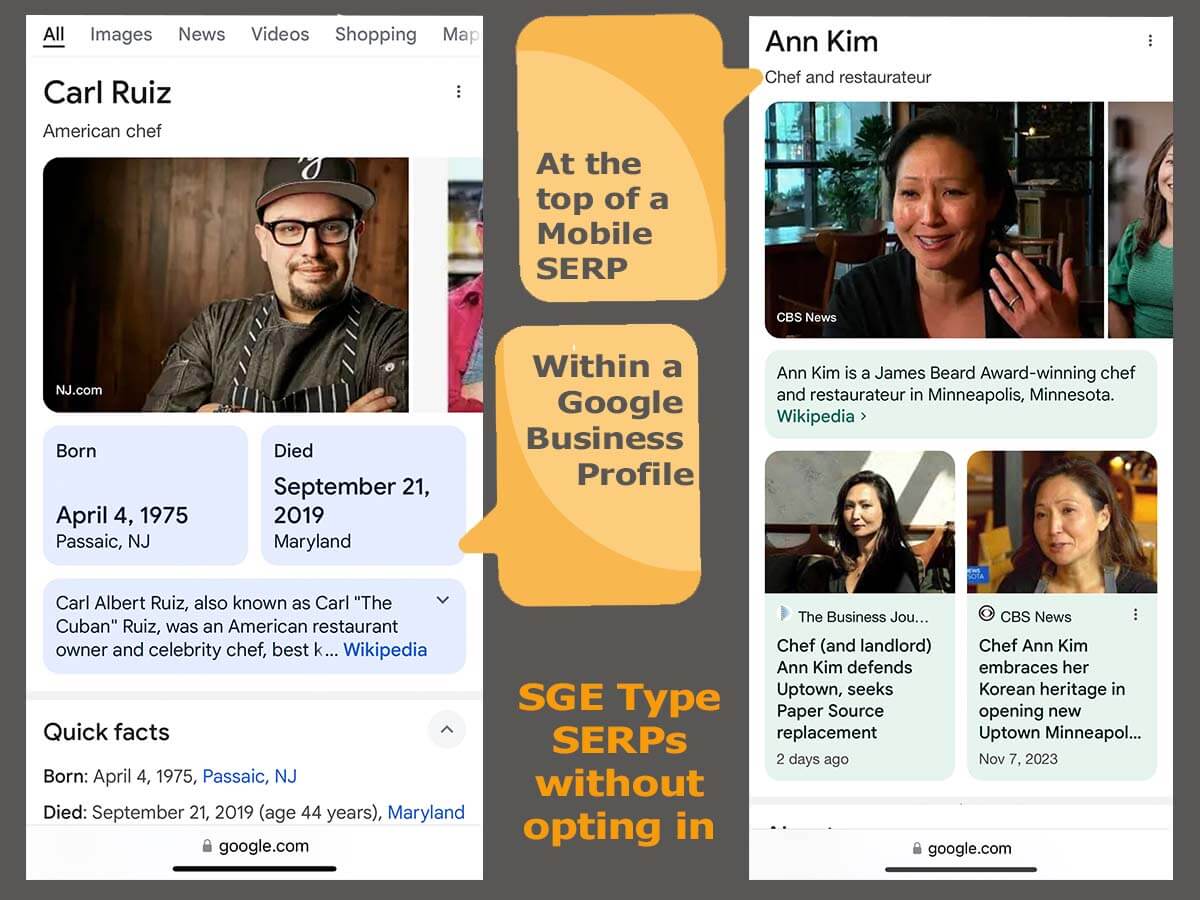
A benchmark research study by Authoritas notes that “62% of generative links come from outside the top 10 organic domains.” This demonstrates that sites with high semantic relevance and strong entity clarity can out-rank traditional legacy domains inside AI Overviews.
The study also highlighted varying penetration rates across verticals, showing lower initial penetration in sensitive YMYL niches, while Insurance stood at 52%, Finance at 71%, and Healthcare at 64%.
What does this mean for websites?
- Top-of-SERP Placement: AI Overviews command premier real estate above organic links for nuanced informational queries.
- Information Synthesis: Because answers synthesize multiple domains, earning inclusion as a cited source is essential for maintaining brand presence.
Measuring Success in Answer Engine Optimization (AEO)
- Focus on tracking qualified conversions, assisted leads, and brand search lift rather than vanity page views alone.
- Establish dedicated reporting for AI citations across platforms including Google AI Overviews, Perplexity, and Gemini.
- Continuously audit and expand your structured data footprint to make every key business fact machine-verifiable.
SUMMARY: Thriving in the AI Overview Era
Your business can gain a decisive competitive edge in AI search. By producing original, non-commodity research and structuring your knowledge for machines, your brand can become the trusted authority AI models cite. NotebookLM is one of our preferred platforms for building a grounded authority graph for AI Search.
If you are ready to secure your competitive advantage, contact Hill Web Marketing at 651-206-2410
References:
[1] Glenn Gabe on X (formerly Twitter), Jan 28, 2024, https://x.com/glenngabe/status/1751576093654462855
[2] Rany Ng, “Learn as you search (and browse) using generative AI,” Google Blog, https://blog.google/products/search/google-search-generative-ai-learning-features/
[3] Elizabeth Tucker, “New ways we’re tackling spammy, low-quality content on Search,” Google Blog, https://blog.google/products/search/google-search-update-march-2024/
[4] Elizabeth Reid, VP of Google Search, official statement on search evolution.
Frequently Asked Questions About AI Overviews
Will AI Overviews reduce my website traffic?
Not necessarily. Google has reported that when searchers click through to a website from an AI Overview, those visits are higher quality, with visitors spending more time on the site and demonstrating higher commercial intent.
Is using AI to write content against Google’s guidelines?
No. Google evaluates the quality, accuracy, and helpfulness of content regardless of how it was produced. However, using automated content primarily to manipulate search rankings violates spam policies. Google prioritizes content that demonstrates verifiable human experience.
How do I ensure my content performs well in AI Overviews?
Focus on creating original, first-party research with clear entity definitions, concise “Answer-First” formatting, clean heading hierarchy, and comprehensive Schema markup.